Picture this: six months of saving, three weekends in the garage, and your car finally looks exactly how you imagined it. Then a police car pulls alongside you on the A-road home, blue lights flicker on, and everything unravels because of a modification you assumed was perfectly fine. It happens more often than you’d think. The rules around illegal car modifications in the UK are specific, sometimes counterintuitive, and routinely misunderstood — even by enthusiasts who should know better.
Neon Underglow: The Mod That Looks Simple But Isn’t
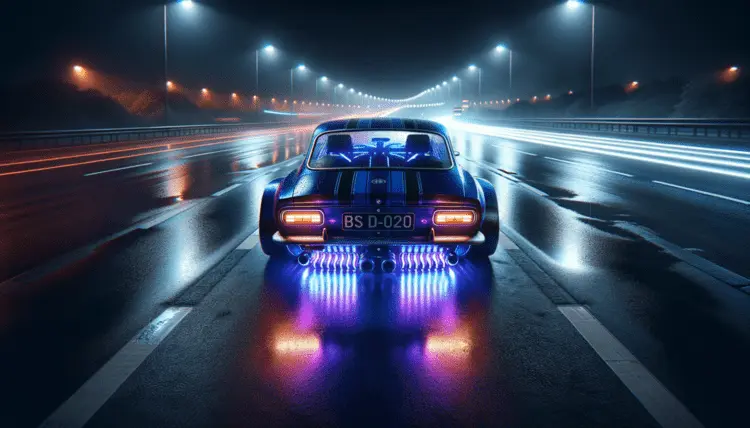
Neon underglow sits in a legal grey area that trips up a huge number of UK owners. The short answer is that underglow is not explicitly banned — but the colour and behaviour of the light almost certainly will be.
Under the Road Vehicles Lighting Regulations 1989, vehicles cannot display certain colours to the front or rear while in motion on a public road. Red lights must only face rearward; white or yellow lights must face forward. Any underglow emitting blue or red light is illegal outright, as these colours are reserved for emergency vehicles.
Flashing or strobing underglow — regardless of colour — is also prohibited. Even a static white or amber underglow could attract attention from police if it’s deemed to cause distraction or dazzle. In practice, most underglow setups on UK public roads are operating illegally in some respect. Save them for track days or car shows on private land.
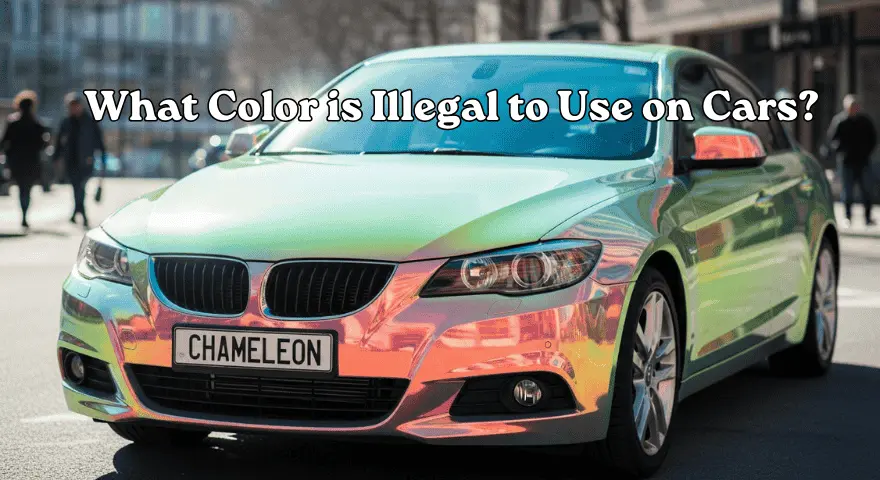
Chrome Wraps, Colour Changes & What DVLA Actually Requires
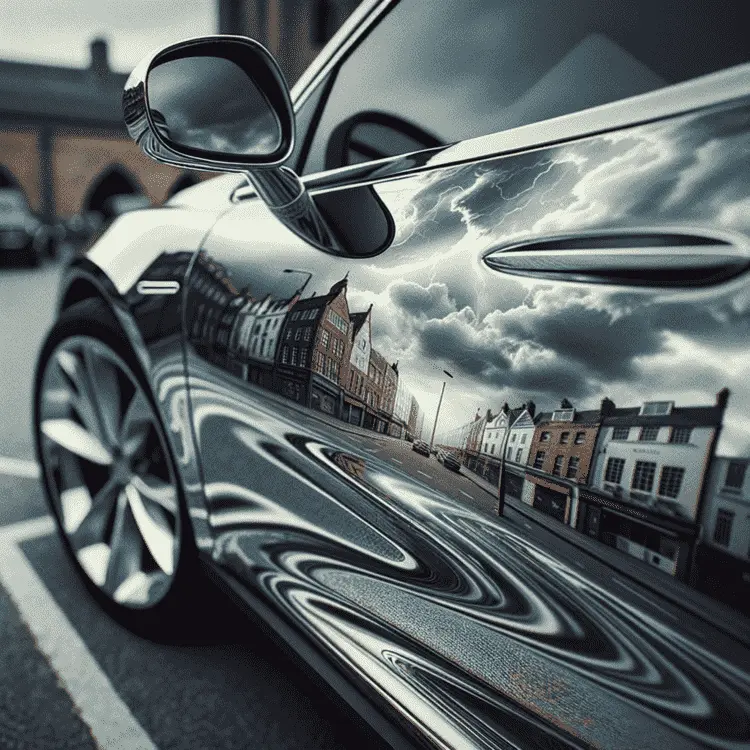
A full chrome wrap is legal to drive on UK roads — there’s no law banning reflective or metallic vinyl. However, if you’ve gone the whole hog and changed your car’s colour from the registered shade, you must notify the DVLA. Failing to update your V5C logbook to reflect the new colour is technically an offence, and it can also cause complications with your insurer.
The notification process is straightforward: update Section 7 of your V5C and send it off, or use the DVLA’s online service. It costs nothing and takes minutes. There’s no legitimate reason to skip it.
One point worth flagging: an ultra-reflective chrome wrap can, in theory, dazzle other drivers and could be considered a hazard under the Construction and Use Regulations. There’s no specific case law banning it outright, but it’s a conversation you don’t want to have at the roadside.
Window Tints: The 70% Rule That Most People Get Wrong
Window tinting is one of the most common illegal car modifications in the UK — not because people fit dark film deliberately to break the law, but because they don’t understand the legal limits before they buy.
The rules are set out clearly in the Road Vehicles (Construction and Use) Regulations 1986. The front windscreen must allow at least 75% of light through. Front side windows must allow at least 70%. Rear windows and the rear windscreen have no legal minimum — you can go as dark as you like back there, as long as you have functioning mirrors on both sides.
Police can issue a prohibition notice on the spot if your tints fall below these thresholds, and the car cannot be driven until the tint is removed or replaced. Many budget film kits sold online don’t specify their visible light transmission percentage — if yours doesn’t, assume it’s borderline at best.
Exhausts, Suspension & the Mods That Kill Your MOT
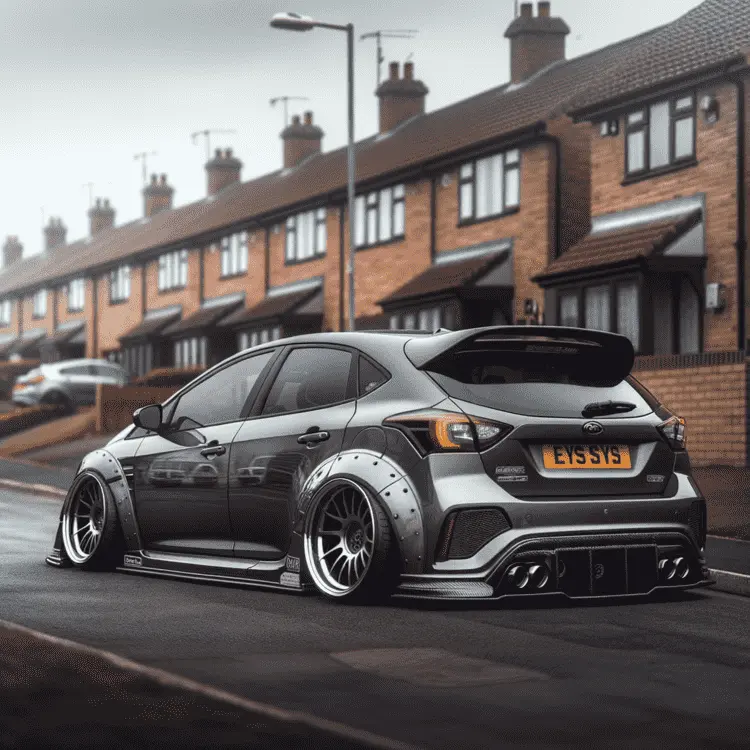
Aftermarket exhausts are perfectly legal — until they’re not. The legal noise limit for vehicles first used after 1 January 2016 is 74 decibels. Cars from earlier periods have slightly different limits, but the principle is the same: if your exhaust makes a racket, it’s illegal. Anti-social hours or residential streets don’t change the law, they just increase the chance of enforcement.
Lowering your suspension is similarly nuanced. There’s no law specifying a minimum ride height, but you cannot lower a car to the point where components foul the tyres, scrape the road, or compromise steering geometry. An MOT tester will reject a car if the bodywork, chassis, or wheel arches contact the tyres under normal suspension travel.
Here’s a quick checklist of modifications that commonly cause MOT failures or police attention:
- Tyres with a tread depth below 1.6mm across the central three-quarters of the tread
- Aftermarket headlights that aren’t E-marked or don’t meet beam pattern requirements
- Tinted or smoked rear lights that reduce the effectiveness of brake lights
- Exhausts exceeding legal noise limits or emitting visible black smoke
- Suspension so lowered that tyres contact bodywork
- Any structural modification to the bonnet, boot, or body panels that affects pedestrian safety standards
- Non-standard number plates that don’t conform to DVLA display regulations
What’s Genuinely Legal — And Where the Real Opportunities Are

Not everything in the modification world is a legal minefield. There’s a substantial list of changes you can make without any regulatory anxiety whatsoever.
Alloy wheels are completely unrestricted, provided they don’t cause tyre clearance issues and the tyres fitted remain within the approved load and speed ratings for your vehicle. Body kits and spoilers are legal as long as they don’t create sharp edges that could cause injury in a pedestrian impact — a consideration that’s actually tested during MOT inspections on newer cars.
Interior modifications — custom steering wheels, bucket seats, roll cages — are largely unregulated for road use, with the important exception that airbag systems must not be disabled without appropriate engineering consideration. Performance remaps sit in a legal grey area with insurers rather than with the law itself; they’re not illegal to fit, but failing to declare them to your insurer could void your cover entirely.
One of the cleanest ways to personalise a car while staying firmly within the law is through the registration plate. Personalised plates at Number 1 Plates must still comply with DVLA rules on font, spacing, and background colour — but within those parameters, a private plate is one of the most distinctive and entirely road-legal statements you can make.
How to Modify Legally: The Three Questions to Ask Before You Fit Anything
Before committing to any modification, run it through this simple framework:
- Does it comply with Construction and Use Regulations? These cover everything from lighting and noise to tyre dimensions and structural integrity. If the product listing doesn’t reference compliance, ask the manufacturer directly.
- Will it pass an MOT? Not all legal modifications are MOT-friendly — a technically street-legal lowering kit can still fail if the geometry is off. Ask an MOT tester before fitting, not after.
- Have you told your insurer? This step gets skipped constantly. Modifications that void insurance cover can turn a minor accident into a catastrophic financial event. Declare everything, even if your premium nudges up.
The UK modification scene is genuinely vibrant — from track-prepped Caterhams to immaculately detailed show cars that never see rain. The law isn’t there to kill enthusiasm; it mostly exists to keep poorly engineered modifications off public roads where they can harm other people. Know the rules, build responsibly, and your creation will turn heads for the right reasons.