Most of us think we can paint our vehicles any shade we want. You buy a car, pick a style, and make it your own. But the reality is much different.
Choosing the wrong paint job or finish can actually get you pulled over. If your ride looks too much like an emergency vehicle or blinds oncoming traffic, the law will step in. Let’s look at exactly what car colors and finishes are illegal on public roads.
Why Certain Car Colors and Finishes Are Restricted
Traffic authorities do not care about your personal style. They care about safety. Car color laws exist to prevent accidents and stop public confusion.
If you paint your vehicle to look exactly like a police cruiser, other drivers will panic. They might slam on their brakes or pull over, creating a dangerous traffic hazard. Furthermore, extremely bright or reflective finishes can bounce sunlight directly into the eyes of other drivers. Governments create these restrictions so roads stay predictable and emergency vehicles remain easy to spot.
The Most Heavily Restricted Colors and Lights
Standard factory paint is almost always fine. The legal trouble starts when you mix specific colors with aftermarket lighting setups.
Red and Blue Color Combinations
Red and blue are the universal colors of authority. Ambulances and fire trucks use red, while police departments rely heavily on blue. Because of this, putting a heavy blue and red color scheme on a private vehicle raises immediate red flags. When you pair these colors together, police will assume you are trying to impersonate an emergency responder.
Flashing Lights and Light Bars on Civilian Cars
Paint is one thing, but lighting changes everything. Adding a flashing light bar to your roof is highly illegal for regular drivers. Many traffic regulations strictly ban forward-facing red or blue warning lights. Those colors tell people to stop immediately. If you use them, you are breaking the law.
Blacked-Out Windows and Tinted Lights
Many drivers love the stealthy, all-black look. While black paint is perfectly legal, modifying your car with heavy window tints and blacked-out lights is not. Smoked taillights and dark headlights severely reduce nighttime visibility. They also make it impossible for law enforcement to see inside your vehicle during a traffic stop.
Car Paint Designs That Mimic Law Enforcement
Impersonating a police officer is a serious crime. Doing it with your car’s paint job will land you in just as much trouble.
Black and White Police-Style Paint
The classic black-and-white door pattern is famous on patrol cars. If you copy this specific layout on your daily driver, you will confuse people. Many regions actively ban civilian cars from using this high-contrast police style.
False Police Stickers, Badges, and Authoritative Markings
You can paint your car white, but adding official-looking decals crosses a major legal line. Slapping a fake badge, a 911 sticker, or authoritative stripes on your doors is illegal. Authorities view this as a direct attempt to trick the public.
Reflective, Chrome, and Neon Finishes That Break the Law
Technology has made crazy vehicle finishes easier to get than ever. But just because you can buy it doesn’t mean you can drive it on the highway.
Mirror Chrome Wraps and Highly Polished Metallic Paint
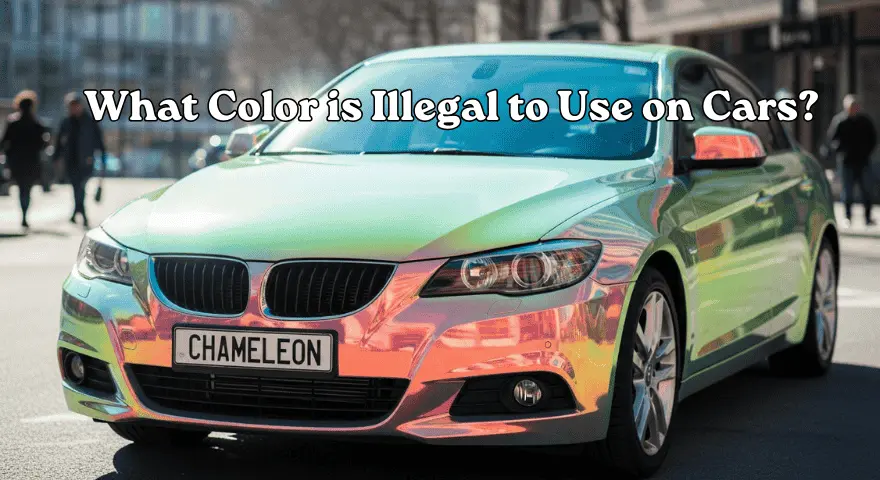
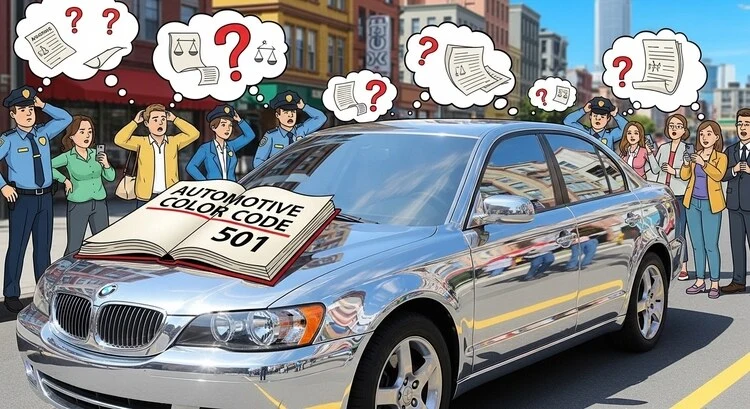
Imagine applying a full mirror chrome wrap to a sleek 2026 Honda Accord facelift. It might look amazing in a parking lot, but on the road, it becomes a massive hazard. Mirror finishes reflect harsh sunlight and high-beam headlights directly into the eyes of other drivers. Because this extreme glare causes accidents, many areas restrict highly polished metallic coatings.
Bright Neon, Fluorescent, and Reflective Vinyl Coatings
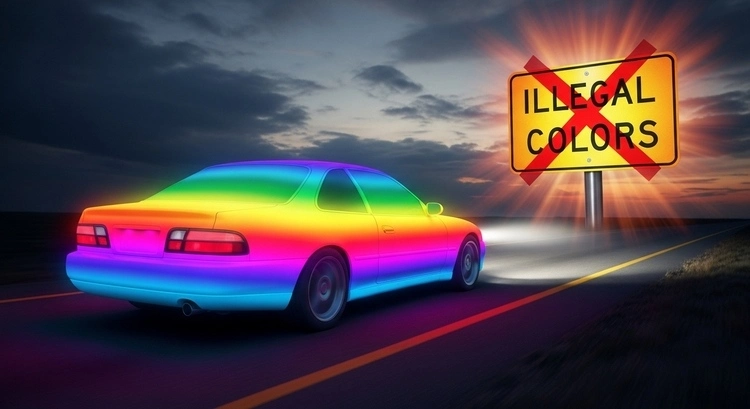
Neon green, bright pink, and fluorescent orange are incredibly distracting. Emergency and construction crews use these highly visible colors to warn people of danger. When regular drivers use them, especially in highly reflective vinyl, it confuses traffic and creates unnecessary distractions.
Glow-in-the-Dark, UV Reactive, and “Luke Black” Paint
Paints that react to UV light or glow in the dark might look like normal paint during the day. However, at night, they can disorient other drivers. Similarly, ultra-dark paints that absorb light make your vehicle invisible on unlit roads. Because they ruin nighttime visibility, most jurisdictions ban them.
The Role of Car Wraps and Custom Paint Jobs
Changing the look of your vehicle is easier than ever. Vinyl wraps and custom paint jobs offer endless possibilities, but you must stay within legal limits when designing your dream ride.
Is It Illegal to Paint Your Car a Different Color?
No, it is perfectly legal to change the color of your car. However, you must notify your local vehicle registration office, like the DMV or the DVLA. They need to update your vehicle’s title and registration documents to match its new appearance.
How Custom Car Wraps Can Accidentally Break the Rules
Wraps let you transform your ride fast. But even if you are just personalizing cute cars for women with a vibrant pink or sparkling finish, you might still break local visibility laws. If your wrap reflects too much light or uses official emergency patterns, police will pull you over.
How Vehicle Color Laws Differ by Country and Region
Traffic safety rules change depending on where you drive. What is perfectly legal in one state might get your car towed in another country.
United States Regulations
In the US, laws heavily restrict red and blue colors combined with flashing lights. Individual states also enforce specific bans on highly reflective finishes and neon underglows to prevent highway glare.
United Kingdom Rules
The UK strictly regulates colors that mimic police, fire, or ambulance fleets. You cannot use specific high-visibility checkerboard patterns, called Battenburg markings, or blue warning lights on private vehicles.
Germany and StVZO Standards
Germany enforces the strict StVZO visibility standards. Dark, light-absorbing paints or highly reflective chrome finishes often fail these safety inspections. You usually need special government approval to make unusual custom wraps road-legal.
Penalties for Using Illegal Colors and Modifications
Breaking car color laws comes with serious consequences. Authorities treat illegal modifications as major safety hazards, not just minor cosmetic issues.
Fines and Police Warnings
If your car features an illegal neon wrap or restricted lights, police will likely issue a fine or a “fix-it” ticket. This legal notice forces you to remove the illegal material within a few days.
Car Impoundment
If your paint job closely mimics a police cruiser, authorities will not let you drive away. They have the right to tow and impound your car on the spot to protect the public.
License and Registration Suspensions
Ignoring fines or keeping illegal paint jobs can ruin your driving record. Your local motor vehicle department can suspend your vehicle registration or your driver’s license until you fix the issue.
How to Check if a Color or Wrap Is Legal in Your Area
Do not guess when it comes to traffic laws. A quick check can save you from massive fines and a lot of stress.
Ask Local Traffic Authorities
Call your local highway patrol or police non-emergency line. They will gladly tell you which colors, lights, and wraps violate local traffic rules.
Check Official Government Websites
Visit your state’s DMV or Ministry of Transport website. Look for the vehicle equipment regulations section to read the exact rules on automotive paint and lighting.
Talk to Reputable Auto Shops or Custom Painters
Professional wrap installers know the local laws inside and out. A good auto shop will warn you if your custom design is illegal and help you choose a safe alternative.
Conclusion
Picking a car color is about balancing personal style with public safety. Authorities restrict shades like red and blue, along with highly reflective finishes, to prevent public confusion and dangerous glare. Always check your local laws before you paint or wrap your vehicle to ensure your custom ride stays street-legal.
FAQs
Is It Legal to Paint a Car With Vantablack?
While Vantablack is not specifically named in most traffic laws, its extreme light-absorbing nature makes it illegal. It renders the car virtually invisible at night, failing basic road safety standards.
What Colors Are Illegal to Have Under Your Car?
Most regions strictly ban red and blue underglow lights. These colors imitate emergency vehicles and easily distract other drivers on the road.
Which Color Makes a Car the Most Dangerous to Drive?
Studies show that black cars are the most dangerous. They blend into the road during the night and low-light conditions, making them very hard for other drivers to see.
What Car Color Is the Rarest?
Based on factory production numbers, colors like purple, gold, orange, and yellow are the rarest shades you will spot on public roads.